Showing posts with label search engine optimization. Show all posts

Monday, 31 July 2017

4 Types Of Seo Specialists Who Can Work On Your Website

SEO is broad, a single person cannot perform all the SEO tasks that are needed to be done. Most probably you might have already encountered a person claiming as an all in one expert though. Trust me, he is either a rookie or does not know about SEO at all.  

If you even casually divide the work done in a typical SEO, it splits into four different areas and each area can be mastered only if someone works delicately in it. Over the past few years of my experience as a developer and working with the website SEO, I have identified that there are typically four types of SEO specialists. It’s not a formal classification, but my views, you are free to disagree with me.  

In this article, I have tried to explain four major SEO tasks and how they are headed by respective experts. So, let just dive in.  

1. The data Analysts


Data analysis is certainly the most crucial part of the website SEO in every sphere. Whether it's an eCommerce store or a blogging site, understanding of large sets of data and the ways to parse them into useful information is an art, and it requires an analytical mindset.

An SEO specialist with the proficiency in the data sciences, statistics, can work best as an Analytics SEO. Such SEO practitioners have significant experience with data interpretation and can transform a raw data into useful SEO insights.  

For example, it's not that easy to understand most of the data that is shown to you by the Google Analytics. It requires a great mindset to read those data and utilize them to make an interpretation that would guide the teams to make the further strategies for the SEO improvement.  

So, I think it requires the skill sets of both the SEO and analyst to own a task of correlating data, building dashboards, and making audit reports that can be trusted by all.    

2. The Technical SEO 


Technical SEO may come from the development and design backgrounds. These professionals are either former web developers, Web designers, or software engineers. The motive for getting into the SEO task is simply to ensure that SEO is intact right from the development phase of a website. Moreover, due to their technical background, web development experience, and now working for SEO, they can be a useful asset for your website SEO as well as optimization. 

You would hardly find a developer considering the minute SEO aspects in the development phase. With a technical SEO in the team, the same can be made sure, and further more, other aspects like W3C compliance, JavaScript Usage, Image compression, CDN implementation can be well monitored by him.  

You can also expect these SEO professionals to work on On-page SEO, UX, and UI optimization as well. For example, a technical SEO would know the best practices to design the Web forms for optimized UI and UX.  

You might want to give more than just the admin panel access to a technical SEO to thrive and enact the code changes as well.   

3. The content SEO


The content SEOs are well aware of the on the page SEO techniques and their constant focus lay on almost all the aspects that determine the improvement in the search ranking organically and inorganically. From on-page content optimization, keywords research, back-links earning, to Guest blogging, a content SEO can handle every aspect that comes on the page.  

It is mostly due to the previous careers as writers, branding experts, corporate communications, PR, and Social media management, content SEO have a better understanding of how things can be written so that the search engines can rank them well in the SERPs.  

They play an effective part in the content marketing strategy preparation and implementation. They are also well equipped with the analytics skills to discover the content performance issues and prepare a road map to fix them.  

The major aim of the content SEO specialist is always finding the new ways to route website traffic to their sites and earn new backlinks in collaboration with the content developers. This field is not limited as the soul of the on page SEO lies in the content optimization for improved ranking.   

4. All rounders or Novice  


These are the learners class of SEO professionals who often rely on SEO plugins and tools. With lesser experience and willingness to learn new things they are not meant to be discouraged or ignored. I have come across various rookies who with their simple approaches and with the help of popular tools, have succeeded many times.   

Most often these SEO plugins and tools claim to provide an all in one SEO for the less experienced practitioners. And due to the extreme success of some of these tools, they might come to you with one-size fits all approach. Eventually, the learners do become the experts as the time passes and they find that there is nothing like one tool can fix all issues.   

So, if you ever encounter any such SEO- be encouraging with them! In fact, if your SEO budget allows you to hire just a single person to run the SEO marketing, this novice class of SEO practitioners would work the hardest and cover most of the things. 

Everyone starts as a novice, every SEO learns through the wining history and SEO mistakes as well. Eventually, the learning curve increases and with the experience the novice becomes an expert. So never under estimate them. They are enthusiastic and always ready to fly higher without fear.

Monday, 24 July 2017

Are You Optimizing For Google Image Search Results?

We have been making enormous efforts in improving the SEO for web search results on Google search engine. We have also been applying the same intensity of efforts on Google Voice search results. But, there is really a lesser segment that really cares about the Google Image search results. 
It has been so underutilized without knowing that Google image search is the second most used search platform after the Google web search or so called Google.com. That say’s an article on Moz.com

Are you really taking images seriously?


The image searches on Google Image is more than that of the search queries that are performed on any of the top websites like YouTube, Google Maps, Amazon, and also the Facebook. This information clearly means that Google image search shares a huge proportion of overall searches on the internet. However, knowingly or unknowingly, we often make mistakes with the images that we use and thus lose the visibility on this massive search platform.

How we post images and what mistakes we make?


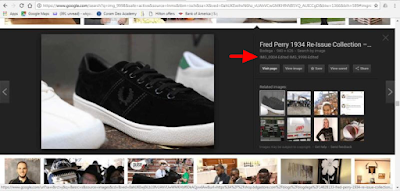
Wrong Names:  People posting the images often overlook to optimize the images to show on the Image search results. They give some really unique names to their images which no searcher will use in the query. They give the names like "IMG_000023", "Image_1", "IMG_Edited_0012" etc. The probability of any user searching on the internet or Google image search with these strings is nearly zero. This means the image will never show up in the search result at least for the keywords wasted in naming it wrongly. And even if the image comes up in any random search result, it is due to the extra information feed (If given) like Caption, description etc. in Image SEO.

Wrong Names of Image
Unrealistic image file names can put you at a disadvantage in image SEO.
Wrong Keywords:  Some uploaders use the wrong names or random phrases in the image name, not even relevant to the image. Putting keywords not relevant to the image will push your image to show in the irrelevant search results. So, despite your image get listed on the top, it will hardly get a click.  Below is an example of an image labeled with the wrong keyword that made it appear in a search query for Smart-watches. Would a person searching for a Smartphone image click on it?

Wrong Keyword Name
Irrelevant keywords can make your images end up in an irrelevant search result.

Stock photos:  
Stock photos can be used in various events. However, overuse will make your search image listing unauthentic and unrealistic. Especially in the cases where you put an image to say something about you or your business. For example, the below image screen shot was taken for a search made for "Lawyers in Delhi". The circled images are stock photos which you might have seen many a time on different websites. They do not appeal you to click on them. Hence, Google will eventually lower the ranking of these images. 

Stock image
Stock images don’t provide the kind of authenticity and authority your image needs to have.

Overly sized:  
Large sized images take a longer time to load. You can't expect the users to wait for more than 2-3 seconds. Reducing the file size will considerably reduce the page loading time, but that does not mean you need to compromise with the image quality. There are various free online programs that can be used to cut short the unnecessary data and reduce the file size without losing the image quality. Use these tools to compress the file size and reduce the page loading time. 

Wrong image ratios:  It's important to post the images in a standard expected ratio such as 16:9, 4:3. Google in the search results view, uses the thumbnail views reduced to a small size. In the case of using the images in the non-standard ratios, Google will automatically resize the image to fit the standard ratio frame. Due to this resizing, the image thumbnail might loose the focus and valuable details might get omitted.

What should you do for better indexing and ranking with images?


Google doesn't see the images as it reads the textual contents. So the meta-data, labels, and descriptions provided with the images become crucial for indexing by the Google image search. Google uses this data to identify the images and their context of usage. 

The more easily and deeply the images are indexed, the more is the chances for better ranking in the search results. The following listed details are the main content that you should provide while uploading the images:

File name


As explained above, the file name is a fundamental and crucial entry that can give a context to your image. Never use irrelevant and unrealistic (IMG_00023) file names for your images. You should leverage this entry and provide a more appropriate file name that defines the image and its context. You can use your main keyword relevant to the image in the file name. 

ALT tags


ALT tags or Alternate Texts are the HTML tags that are used with the images to show up in case the image does not load or rendered properly. For example, in a browser where images have been disabled, the ALT tag will show up in place of the images. Also, if your image takes a longer time to load, till the image gets loaded, the ALT text will show up. 
This makes sure the search engines do not feel fishy about your images even if they are not rendered properly. Moreover, it will also give the user an idea of the image till it gets loaded completely on the browser. 

Captions


Captions are simply the text that appears with the image on the browser. Captions will always show up. They are generally shown just below the image. You must provide the captions to describe the context of the image to the users.

Image Caption
Captions provide the contextual meaning to the images.


Description


Descriptions allow you to put an explanation of the image by providing additional details like links, keywords, and context. They are generally used by the search engines to read the context of the image. They show up in the search results when an image is listed in the SERPs.

Image Description
Descriptions help the search engines to read your images and their context more easily.

Contextual information

In addition to the meta information, keywords, and description, Google utilize various other supporting contents and information to rank the images. The contextual information can be the page content, Page URL, other images around it, the image site map, Page title etc. You should keep these optimized to render a unified, relevant, consistent and related context of the image. 

Summing up


Images have always been an important element on the web. Though Google cannot index the images like the textual contents, it still uses the supporting texts to identify and judge the context of the images. It's really important to understand the role of images in SEO and do not overlook them as something less important. 

Optimize your images everywhere you use them; Articles, product pages, landing pages etc. A proper SEO of images will also ensure the better performance of the contents related to them. Moreover, they can promote your brand, store, products or services in the search results as well. It's time to invest the deserving time on images and unlock the uncharted potentials that you overlook now.